

Home Heating and Air Conditioning in Nottingham
Looking for heating and air conditioning from a single system? We install home systems that heat in winter and cool in summer, for bedrooms, home offices, conservatories and whole homes across Nottingham.
Heating and Cooling From One System
If you are thinking about air conditioning for your home, it is worth knowing that every system we install heats as well as cools. In a British winter, that is the half of it most of our customers end up using most.
The same wall unit that keeps a bedroom bearable in July will take the chill off it in February, usually within a few minutes of being switched on. One installation, one unit on the wall, one thing to maintain, and no radiator to work around.
Homeowners choose heating and air conditioning in one system because it offers:
- warmth in winter and cooling in summer from a single unit
- room-by-room control, so you heat only the space you are using
- lower running costs than gas for heating individual rooms
- heat within minutes rather than waiting for radiators to warm up
- no second system to install, service or find space for
- quiet operation, day and night

How Air Conditioning Heating Works
A modern air conditioning unit does not make heat the way an electric heater does. It moves heat from one place to another, and it can run that process in either direction. In summer it takes warmth out of the room and puts it outside. In winter it does the reverse, drawing warmth from the outside air, even when it is cold out there, and bringing it indoors.
That is why it delivers more heat than the electricity it uses. A good wall unit produces between four and five units of heat for every unit of electricity it draws. An electric heater gives you one for one.
In practice, you press a button on the remote and the room gets warm. The technical part is only worth knowing because it explains the running cost.
What Home Air Conditioning Heating Costs to Run
A typical 2.5kW wall unit, the size we most often fit in a bedroom or home office, draws around half a kilowatt when heating at full output. At the current price cap rate of 26.32p per kWh, that works out at roughly 14p an hour.
That is the figure at full output. Once the room reaches temperature the unit throttles back and draws considerably less, so a typical evening costs less than running it flat out.
The more useful comparison is what a unit of heat actually costs:
- air conditioning in heating mode: around 5p to 6p
- gas central heating: around 9p
- a plug-in electric heater: 26p
Heating a room this way costs roughly a third less than gas, and about a quarter of what a plug-in electric heater costs. For a home office used all day, or a bedroom used every evening, that difference adds up across a winter.
On the coldest handful of days each year the unit works harder and the gap with gas closes to very little. And this compares heating one room rather than a whole house. For warming an entire property, the central heating usually still wins.
Figures based on the Ofgem price cap for 1 October to 31 December 2026 (26.32p per kWh electricity, 7.97p per kWh gas), a wall unit with a seasonal efficiency of 4.5, and a gas boiler running at 90% efficiency. Your own tariff will differ.

Does The Heating Work When It Is Genuinely Cold?
Yes, and by a wider margin than most people expect.
The wall mounted units we install are rated to keep heating down to between −15°C and −20°C outside, depending on the model. For context, the average January night in Nottingham sits at about 1.5°C, and the coldest temperature ever recorded in the city is −13.3°C, back in January 1987. Even that record night would have been within the operating range of the systems we fit.
What does change is efficiency. The colder it gets outside, the harder the unit works for the same warmth indoors, so running costs rise a little. On a mild November evening you are close to five units of heat per unit of electricity; on a freezing January morning it might be three. It keeps working either way.
You may also notice the unit pausing occasionally in cold weather, with the outdoor fan stopping for a few minutes. That is a defrost cycle clearing ice off the outdoor coil. It is normal, it is brief, and it is not a fault.

Home Heating and Cooling Systems We Install
Every home is different, which is why we do not take a one size fits all approach. We will recommend a system based on the size of the room, how the space is used and the finish you want. We install heating and air conditioning systems for:
- bedrooms
- living rooms
- home offices
- loft conversions
- conservatories and garden rooms
- whole home and multi room setups
The systems themselves include:
- wall mounted heating and air conditioning units
- single room systems
- multi split systems
- larger residential setups across multiple rooms
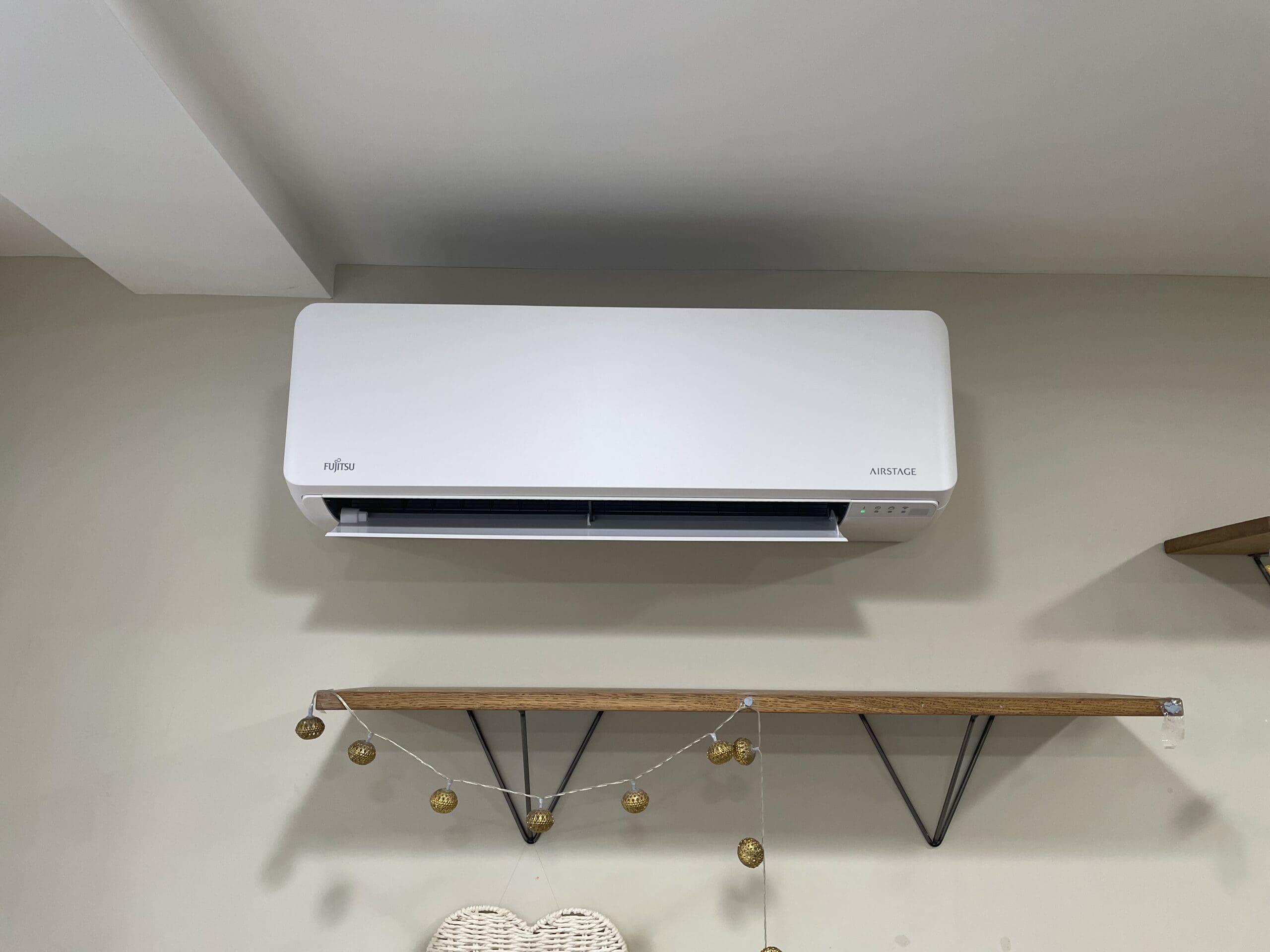
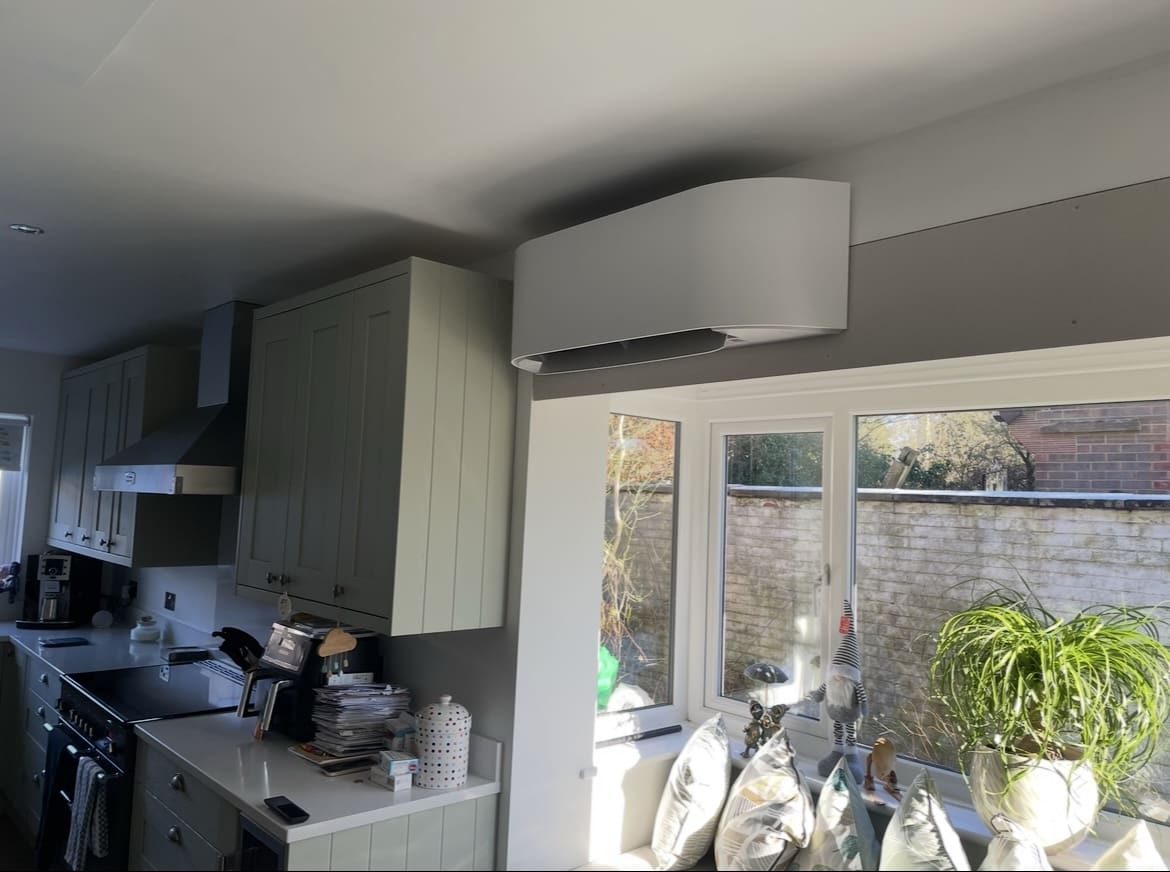
Wall mounted units suit most homes. The indoor unit is about the size of a long shelf and sits high on the wall; the outdoor unit is roughly the size of a small suitcase and goes at the side or the back of the house.
We supply and install systems from Mitsubishi, Daikin, Hitachi and Fujitsu.

Our Home Heating Installation Process

1. Initial enquiry
Get in touch through our contact form and let us know a little about your property and the room you want to heat and cool.

2. Advice and site visit
We will discuss the best options for your space and, where needed, arrange a visit so we can recommend the right system and the right position for it.

3. Free quote
We do not work from fixed prices alone, as every property is different. Instead, we provide a free quote based on the layout, system type and installation requirements.

4. Professional installation
Once approved, we carry out the installation with care and attention to detail. Most single room installations take a day. We agree access times, sheet up, and clear everything away the same day.
Need our expert help? Get in touch now.
Why Choose Atkins Air Conditioning for Home Heating and Cooling
Choosing the right installer matters just as much as choosing the right system. We focus on giving homeowners honest advice and a service that stays straightforward from the first call to handover.
Homeowners choose us because we offer:
- fully qualified engineers, REFCOM registered and City & Guilds qualified
- systems from recognised manufacturers, matched to your home rather than to a price list
- a free site survey with no obligation and no call-out charge
- clear quotations in writing before any work begins
- installation and servicing from the same team, so there is one number to call
- local service across Nottingham, Nottinghamshire, Derbyshire and Lincolnshire

What our customers say.
Get your free quote today!
Trusted by our customers for over 20 years – you couldn’t be in safer hands. Contact us now to book your free consultation with an expert of our team.


Home Heating and Air Conditioning FAQs
Yes, every system we install heats as well as cools, and it is the setting most of our customers end up using most. The unit reverses its cooling process to bring warmth in from outside rather than moving it out.
For heating one or two rooms, usually yes. At current prices it costs around a third less per unit of heat, because you are warming the space you are actually in rather than the whole house. For heating an entire property, generally not.
In most homes, no, and we would not recommend it as a straight swap. One unit heats one room or one open space, and it will not heat your water. Where it works well is making specific rooms comfortable at both ends of the year, alongside the heating you already have.
Colder than it gets in Nottingham. The units we fit are rated to heat down to between −15°C and −20°C outside. The coldest night on record here is −13.3°C.
In many cases, planning permission is not needed, but this can depend on the type of property and where you live. Listed buildings and conservation areas may have added restrictions. We check before we quote.
Usually, yes. Solid walls, period properties and homes without cavity space are all workable. It changes how the pipework is routed rather than whether the job can be done.
Book your appointment now.
Trusted by our customers for over 20 years – you couldn’t be in safer hands. Contact us now to book your free consultation with an expert of our team.