

Commercial Heating and Air Conditioning in Nottingham
Looking for commercial heating and air conditioning in Nottingham? We install, maintain and repair HVAC heating and cooling systems for offices, retail units, warehouses, schools and hospitality premises.
Most Premises Already Have Heating They Are Not Using
If your building has air conditioning, it almost certainly heats as well as cools. Reverse-cycle operation is standard on every air conditioning system we install, and on most systems installed in the last fifteen years.
In a lot of the sites we maintain, that capability sits unused from October onwards while a separate heating system does the work. It is worth checking what your existing plant can already do before specifying anything new.
If you are not sure, we will tell you at the next service visit. It costs nothing and it may save you a capital project.
Commercial Heating Designed Around Your Premises
Zone-level control is the practical difference between HVAC heating and a building-wide system. You heat the areas in use, at the times they are in use, rather than the whole building to one setpoint.
For most sites that means:
- heating and cooling from the same plant, on the same maintenance contract
- individual control by zone, floor or room
- scheduling around trading hours rather than a single building timer
- rapid response from cold, rather than a warm-up period
- no separate heating plant to house, maintain or certify
We size and design around the building, not from a price list. Glazing, ceiling height, occupancy, heat gain from equipment and the hours the space is actually used all change the answer.

Why Businesses Choose Commercial Air Conditioning That Heats
- one asset to maintain instead of two, on one contract and one F-Gas record
- lower running costs than direct electric heating, by a factor of four or more
- comfort in customer-facing areas at both ends of the year
- no gas supply required, which matters for units without one
- fewer points of failure across the building
- capacity already installed on most sites, so often no capital cost at all

What Commercial Heating Costs to Run
A heating system that moves heat rather than generating it delivers between four and five units of heat for every unit of electricity it draws. A direct electric heater delivers one.
Against gas the comparison depends on your contracted rates rather than a published cap, so we will work it out from your actual tariff and your actual run hours at the survey rather than quoting a figure that will not apply to you.
What we can say generally: heating individual zones during occupied hours usually costs less than running a building-wide system to hold the whole premises at temperature, and the gap widens the more of the building sits empty.
Commercial Heating and Cooling Systems We Install
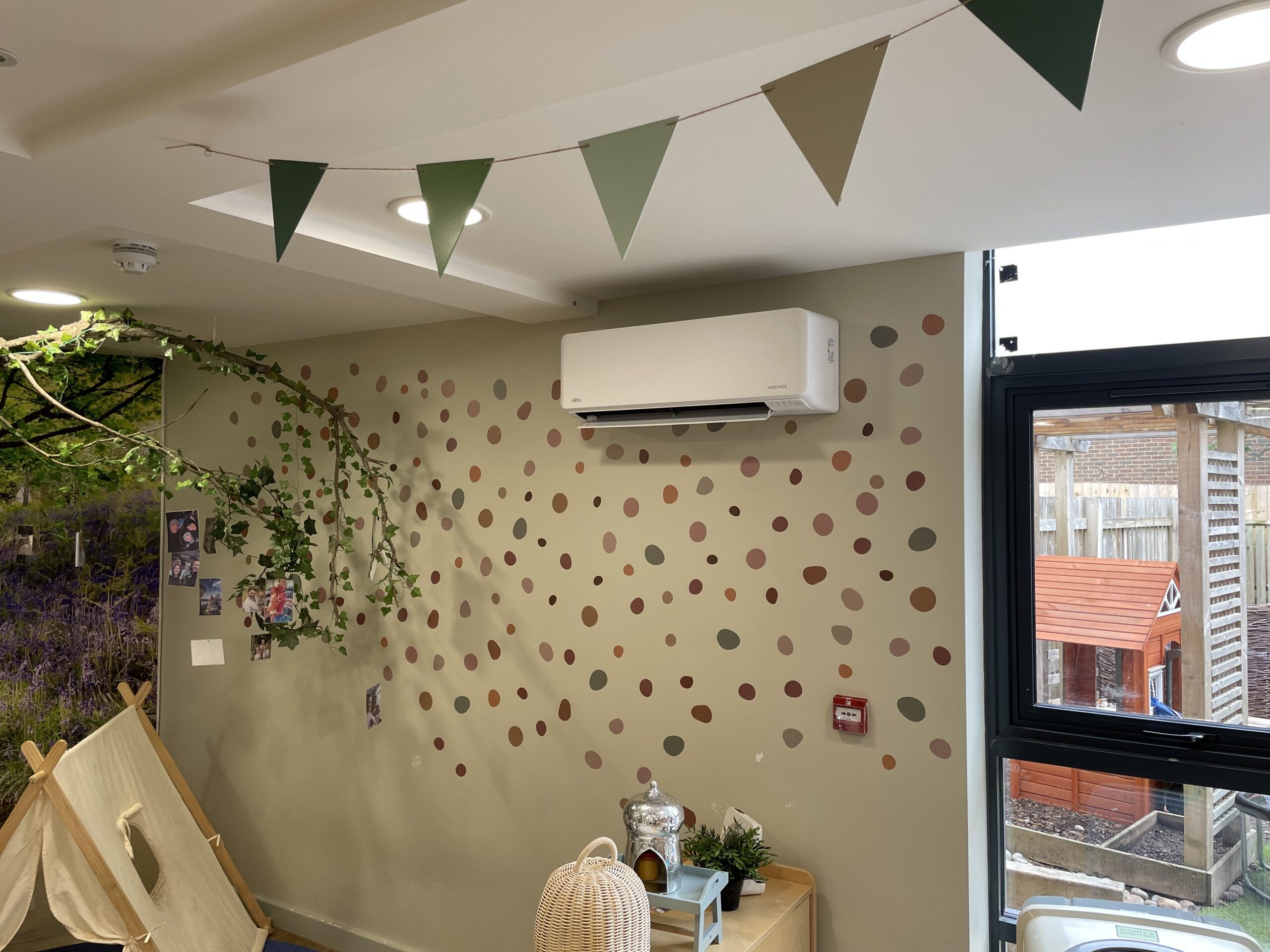
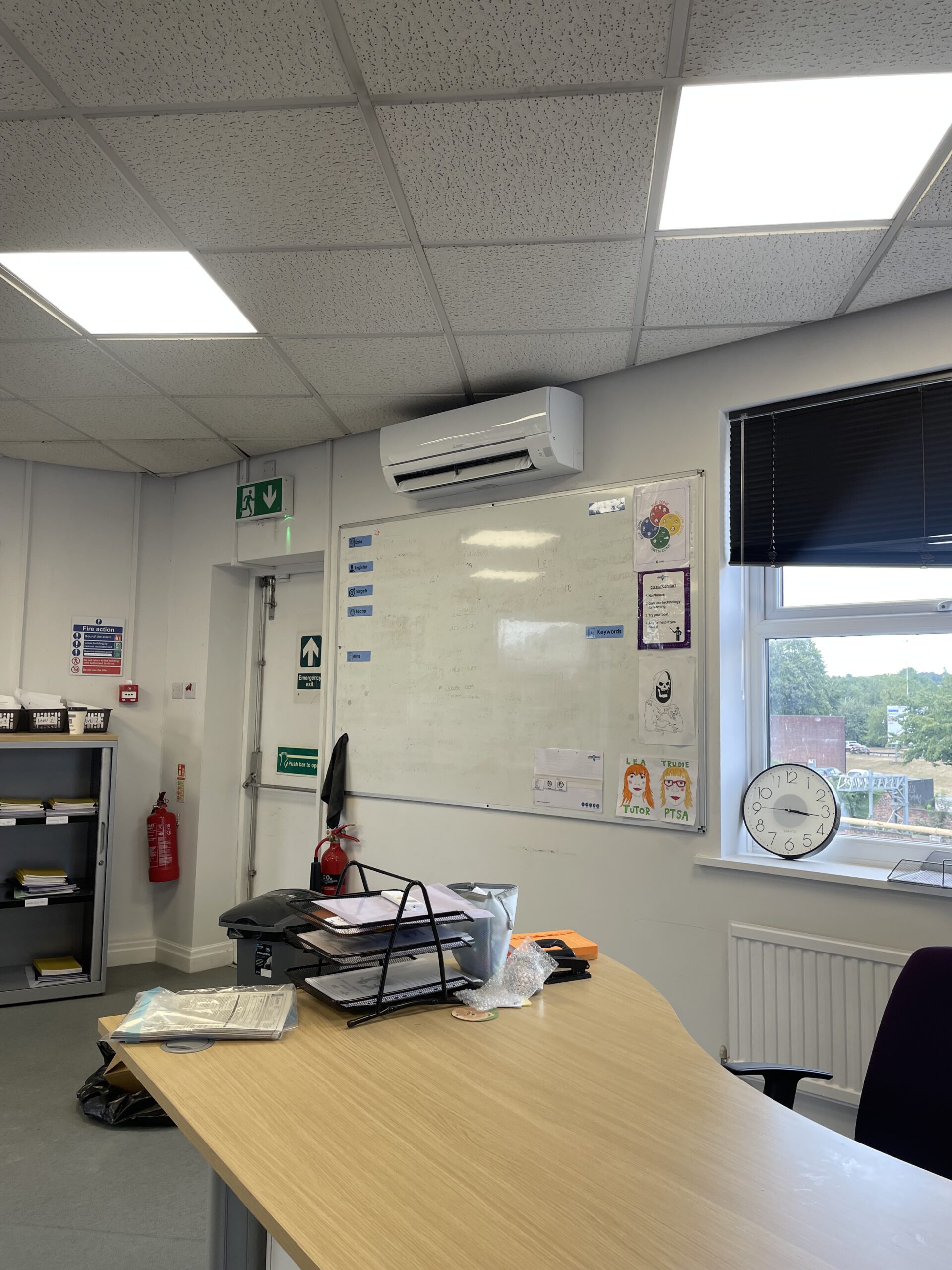
- wall mounted units for offices, meeting rooms and small retail
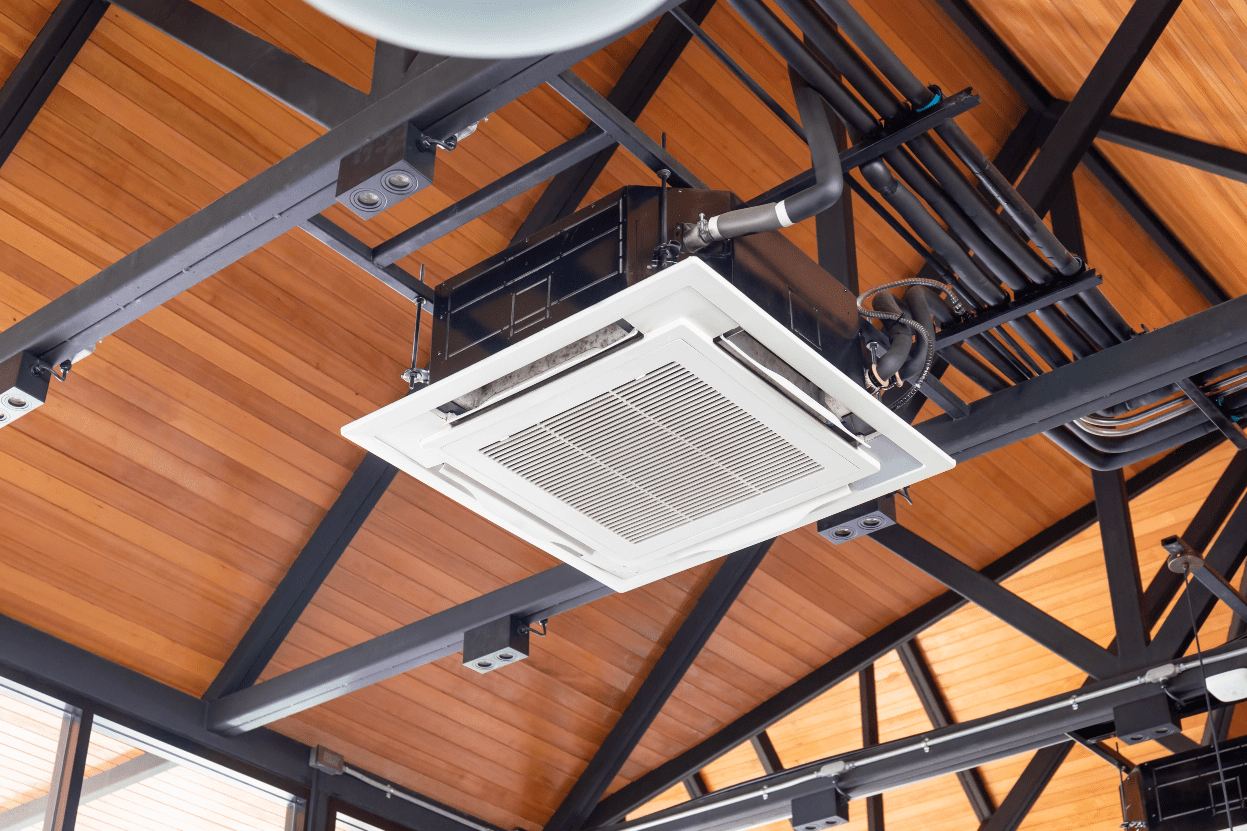
- ceiling cassette systems for open-plan and customer-facing areas
- multi split systems running several indoor units from one outdoor unit
- floor standing units where wall space is limited
- larger multi-zone setups across several floors or buildings
- ducted heating systems
We supply and install systems from Mitsubishi, Daikin, Hitachi and Fujitsu.

Our Commercial Heating Installation Process

1. Initial enquiry
Send us your asset list, a floor plan, or just tell us which areas are a problem.

2. Advice and site visit
We assess the building, the existing plant, access, and the hours you can give us. Free, and usually about an hour for a single site.

3. Free quote
We do not work from fixed prices alone, as every commercial premises is different. You get a written quote against the specification, with what is included and what is not.

4. Professional installation
Carried out to suit your trading hours, including evenings and weekends where the site requires it. We commission the system, hand over the documentation, and set up the maintenance schedule if you want one.
Need our expert help? Get in touch now.
Maintenance, Repair and Planned Preventative Maintenance
A system used for heating as well as cooling runs most of the year rather than one season of it, which changes the maintenance case.
Planned preventative maintenance contracts cover scheduled visits, filter and coil cleaning, refrigerant and electrical checks, performance testing and F-Gas record keeping. Commercial sites are generally visited twice a year; higher-use or critical environments more often.
We also carry out HVAC heating repair across Nottingham and the surrounding counties, on systems we did not install.
See what a commercial air conditioning maintenance contract covers.

Compliance, F-Gas and Inspection Records
Heating with HVAC plant does not change your statutory obligations, but it does consolidate them into one system rather than two.
F-Gas. Systems containing fluorinated gases require leak checking at intervals set by charge size, with records kept. The legal duty sits with the operator of the equipment, not the contractor. We are REFCOM registered, which means we are certified to handle refrigerant, and we update your refrigerant records on the day we attend rather than sending them on later.
TM44 air conditioning inspections. Any building with air conditioning of more than 12kW effective rated output must be inspected every five years. That inspection has to be carried out by an accredited energy assessor, which is a separate appointment from your maintenance contractor, but if your records are not current we will tell you, because it is the kind of thing that surfaces during a lease event at the worst possible moment.

Why Choose Atkins for Commercial Heating in Nottingham
- REFCOM registered and City & Guilds qualified engineers, 18th Edition compliant
- CSCS and PASMA certified for site access and work at height
- all makes and models maintained, whoever installed them
- F-Gas records updated on the day of the visit
- installation, maintenance and repair from the same team
- work scheduled around trading hours, including evenings and weekends
- free site survey with no obligation and no call-out charge on quotations
- based in Nottingham, covering Nottinghamshire, Derbyshire and Lincolnshire

Recent Commercial Air Conditioning Projects
We work with businesses, education providers and other organisations to deliver commercial air conditioning installations that are planned around the way their premises operate.
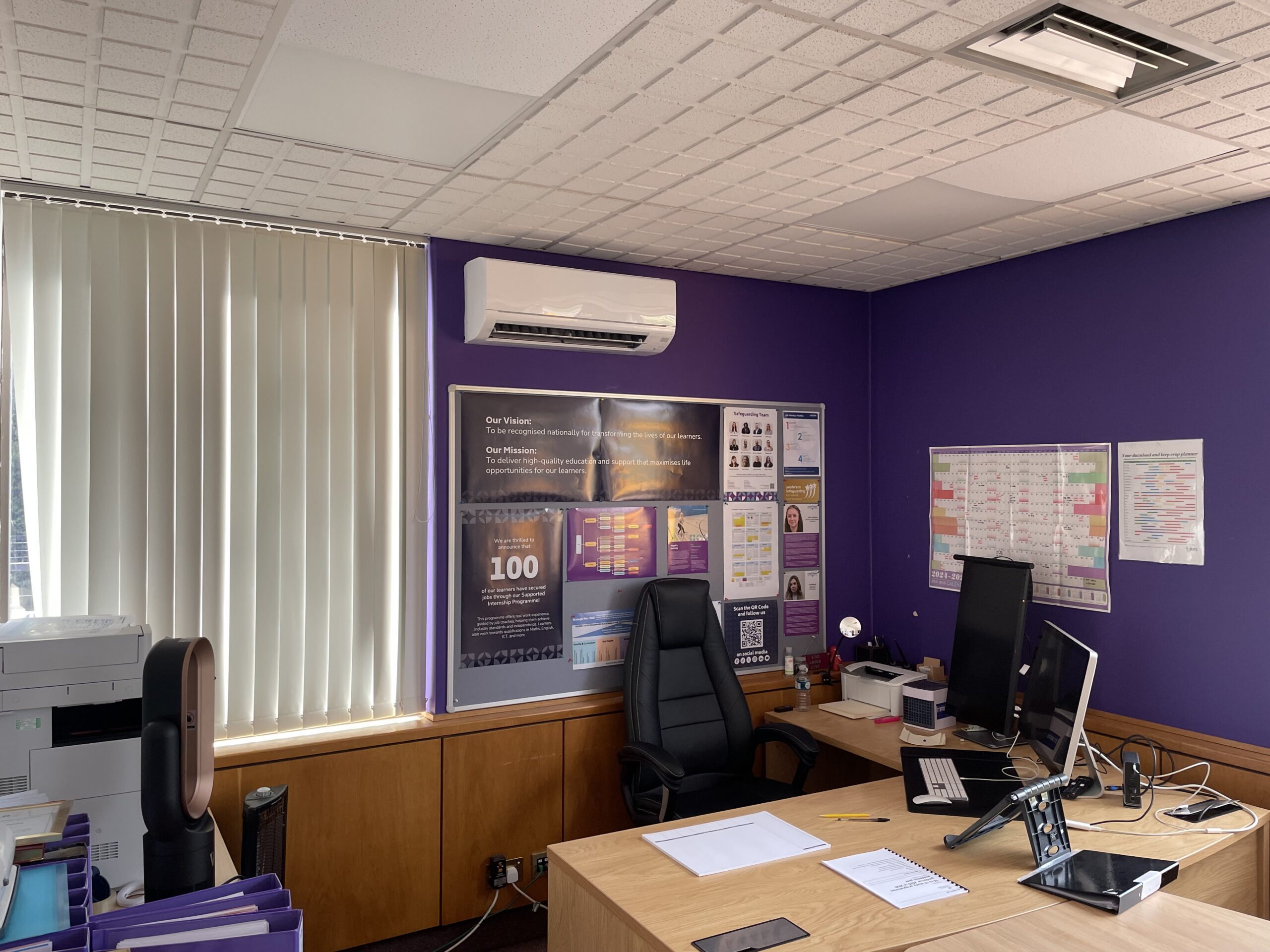
Landmarks Specialist College
Year-round climate control installed across multiple college sites, with the work carefully planned around students, staff and established learning routines.
Wildflower Nurseries
A multi-site cooling project designed to reduce high summer temperatures, with installations completed outside nursery opening hours to avoid disrupting children and staff.
Need our expert help? Get in touch now.
What our customers say.
Get your free quote today!
Trusted by our customers for over 20 years – you couldn’t be in safer hands. Contact us now to book your free consultation with an expert of our team.


Commercial Heating and Air Conditioning FAQs
Yes, reverse-cycle operation is standard on every system we install and on most systems installed in the last fifteen years. In many buildings the capability is already there and simply is not being used.
It delivers four to five units of heat per unit of electricity, against one for direct electric. Against gas it depends on your contracted rates and your run hours, which is why we work it out at the survey rather than quoting a figure.
Yes, evening and weekend working is standard on retail, hospitality and education sites. We agree access and hours before the quotation, not after.
Not necessarily, and on smaller premises often not at all. On larger or older buildings it is more commonly used alongside existing heating to cover specific zones. The survey will tell you which applies.
The operator of the equipment, not the contractor. We carry out and record the work, and we update your refrigerant records on the day. The obligation to hold them remains yours.
Yes, all makes and models. A large proportion of the sites we maintain were fitted by someone else.
Book your appointment now.
Trusted by our customers for over 20 years – you couldn’t be in safer hands. Contact us now to book your free consultation with an expert of our team.